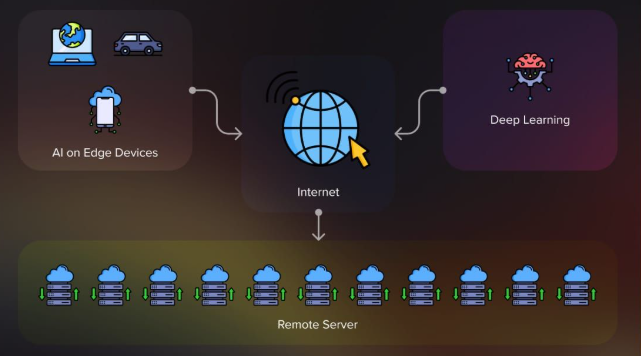
Edge AI represents a significant shift in how artificial intelligence is deployed. By processing data at the network edge, it minimizes latency and enhances real-time decision-making. This technology reduces dependence on centralized cloud infrastructures, thus improving data privacy and security. Various industries stand to benefit from its implementation. Understanding the mechanics and implications of Edge AI is crucial for grasping its potential impact on future technological advancements. What remains to be explored are the specific applications across diverse sectors.
What Is Edge AI?
Edge AI refers to the deployment of artificial intelligence algorithms directly on local devices at the edge of a network, rather than relying on centralized cloud computing.
This approach utilizes edge devices to perform computations locally, significantly improving data processing speeds.
How Edge AI Works
Artificial intelligence algorithms function on edge devices by leveraging localized computing power, which allows for the processing of data closer to its source.
This architecture utilizes machine learning models to analyze and interpret data in real-time, minimizing latency.
Benefits of Edge AI
Numerous advantages accompany the implementation of Edge AI, making it a compelling choice for various applications.
One significant benefit is enhanced data privacy, as sensitive information is processed locally rather than transmitted to centralized servers.
Additionally, Edge AI facilitates real-time processing, enabling immediate decision-making and reducing latency.
These factors contribute to improved efficiency and user experience, appealing to those who value autonomy and responsive technology.
See also: Digital Payments and Fintech
Applications of Edge AI in Different Industries
As industries increasingly seek to harness the power of data, the integration of Edge AI technologies has proven transformative across various sectors.
In healthcare monitoring, real-time patient data is analyzed for timely interventions.
Smart agriculture utilizes Edge AI for precision farming.
Manufacturing automation enhances efficiency, while autonomous vehicles rely on rapid data processing.
Retail analytics and energy management further benefit from localized data insights, optimizing operational decisions.
Conclusion
In conclusion, while Edge AI promises to revolutionize data processing by placing intelligence at the fingertips of local devices, one must ponder: will our smart toasters soon outsmart us in decision-making? As industries embrace this technological marvel, it raises the tantalizing question of whether we are merely enhancing efficiency or willingly inviting a digital overlord into our homes. Thus, as Edge AI gallantly strides into the future, one should remain vigilant—after all, even the sharpest edge can cut both ways.