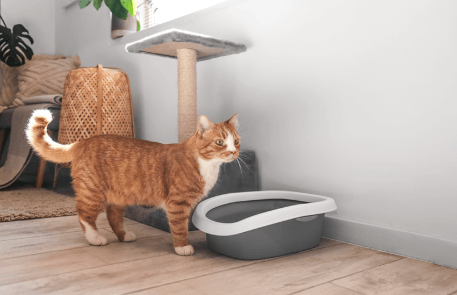
As a cat owner, you probably pay close attention to your pet’s appetite and energy levels, but how often do you monitor their bathroom habits? In the world of feline health, the litter box is one of the most important diagnostic tools available. Changes in cat peeing and pooping frequency are often the very first sign of serious medical issues, ranging from minor infections to life-threatening emergencies. Cats are biologically programmed to hide pain, so they won’t tell you they are suffering—instead, their litter box will.
In this guide, we will discuss what constitutes a normal schedule, the red flags you should never ignore, and the specific timelines that require immediate veterinary intervention.
What Is a “Normal” Bathroom Schedule for a Cat?
Before you can identify a problem, you must know what “normal” looks like. While every cat is an individual, most healthy adult cats follow a fairly consistent rhythm.
Urination Frequency
On average, a healthy adult cat should urinate 2 to 4 times per day. This frequency can be influenced by their diet; for example, cats that eat wet food consume more moisture and may visit the box more often than those on a strictly dry food diet. If your cat is urinating fewer than twice a day, they may be dehydrated or developing a blockage.
Defecation Frequency
Most cats poop once or twice a day. The stool should be firm, brown, and well-formed. If your cat skips one day but behaves normally otherwise, it may not be an immediate crisis, but skipping two or more days is a clear indicator of constipation or a digestive obstruction.
Warning Signs of Urinary Distress
Urinary issues in cats can escalate with terrifying speed. Because their anatomy is delicate, a small amount of inflammation can lead to a total inability to pass urine.
- Frequent Trips with No Result: If you see your cat entering the box every ten minutes but only producing a tiny drop (or nothing at all), this is a major red flag.
- Straining and Crying: Cats are usually silent in the box. If they are vocalizing or appearing to “push” with great effort, they are in pain.
- Licking the Genital Area: Excessive grooming of the urinary opening is a sign that the area is irritated or burning.
- Blood in the Urine: Even a slight pinkish tint in the clumps is a sign of cystitis or crystals.
The Dangers of Constipation and Bowel Issues
While urinary issues are often more immediate, a cat that is not pooping enough is also at risk. Chronic constipation can lead to a condition called “Megacolon,” where the colon becomes stretched and loses its ability to move waste.
Monitoring digestive health is a vital part of proactive pet parenting. In today’s world, we are seeing a massive shift toward using data and technology to manage wellness. Just as humans use smart devices to track their intake and activity, we can now use digital tools to monitor our pets’ internal health. If you are fascinated by how data science and AI are reshaping the future of healthcare, AI for Health provides excellent insights into these modern medical transformations.
When Is It a Medical Emergency?
There is a very thin line between “keeping an eye on it” and “rushing to the vet.” Understanding the timeline of a blockage can save your cat’s life.
The 24-Hour Rule
If a male cat has not urinated in 24 hours, it is a critical emergency. Male cats have very narrow urethras that can easily become blocked by crystals or mucus. Once a cat is “blocked,” toxins begin to back up into the kidneys and eventually the bloodstream. Without treatment, heart failure or kidney failure can occur within 48 hours.
The 72-Hour Rule
If your cat has not pooped in 72 hours, they require professional help. While not always as immediately fatal as a urinary blockage, severe constipation can lead to a rupture in the bowel or severe toxicity as the body absorbs waste products that should have been expelled.
See also: How Gas Fees Work on Ethereum
Environmental Factors That Affect Frequency
Sometimes, a cat isn’t using the box enough because of environmental stress rather than a physical disease. However, the result is the same: “holding it” leads to health problems.
- Litter Box Hygiene: Cats are incredibly clean animals. If a box is not scooped at least once a day, a cat may try to hold their urine or stool to avoid stepping in a dirty box. This leads to concentrated urine and crystals.
- Stress and “Inter-Cat” Conflict: In multi-cat households, one cat may “guard” the litter box, preventing others from using it. This is known as “litter box bullying” and can cause the victimized cat to avoid the box until they absolutely cannot hold it any longer.
- Location and Noise: If a box is next to a loud appliance (like a furnace or washing machine), a cat may be too scared to use it frequently enough.
How to Effectively Monitor Your Cat
If you want to stay ahead of these issues, you need a system for tracking their cat peeing and pooping frequency.
- Count the Clumps: When you scoop the box daily, take note of the size and number of urine clumps. A sudden decrease in size is just as worrying as a decrease in number.
- Use Consistent Litter: Switching litters can make it hard to judge what is normal. Stick to one type so you can easily spot changes in color or consistency.
- Smart Technology: Modern AI-powered cameras and smart litter boxes can now send notifications directly to your phone if your cat’s habits change. This data-driven approach to wellness is becoming the gold standard for pet owners who want to catch problems early.
The intersection of technology and biology is an exciting field that is constantly evolving. For those interested in how these digital breakthroughs are benefiting our lives and the lives of our pets, AI for Health offers a deep look into the future of health monitoring and AI-assisted medicine.
Conclusion
A cat’s litter box habits are not just a chore to be managed—they are a vital sign. If your cat is not using the box enough, they are trying to tell you something is wrong. By understanding the average frequencies of 2–4 urinations and 1–2 bowel movements per day, you can act quickly when things go off-track.
Never ignore a cat that is straining, crying, or avoiding the box for more than 24 hours. Early intervention is the difference between a simple diet change and an expensive, traumatic emergency surgery. Stay observant, keep the boxes clean, and always trust your gut if you feel your cat’s routine has changed. Your vigilance is their best defense against the “silent” illnesses that often plague domestic cats.